I am Mr. Frugal in the kitchen. I got my frugality from my mom who taught me, at a very young age, never to leave even the tiniest morsel of food on my plate unconsumed. My family wasn’t well-off and my parents pinched pennies while they raised me and my five sisters. I think frugality is an admirable trait as long as it doesn’t get ridiculously over the top. I try not to be wasteful and use everything in our fridge and pantry before they spoil like the very last rib of celery or carrot for stir-fries and shrimp heads and shells for stock. I try to always rinse the can of tomato sauce with a little water before tossing it to get the very last ounce of sauce for menudo or afritada.
The other day, I learned a neat trick for using leftover green onion bulbs — the white parts with the roots still attached. These can be used to regrow the green leafy parts that are great for garnishing noodles and soups. Take a small glass jar, like an eight-ounce canning jar, and prop the stems inside. Fill the jar with water until the roots are completely covered and place the green onions somewhere where there’s plenty of sun. We let ours sit on our sun-soaked kitchen windowsill next to the bud vases we use to root cuttings of thyme and other herbs. The bulbs can also be replanted in dirt in containers.
In no time, the aromatic green leaves will start to grow back and you can snip them away as you need them. Replace the water in the jar with a fresh supply every few days.
Green onions cut into fine slivers are an absolute must for dishes like arroz caldo, pancit molo, and pancit palabok.
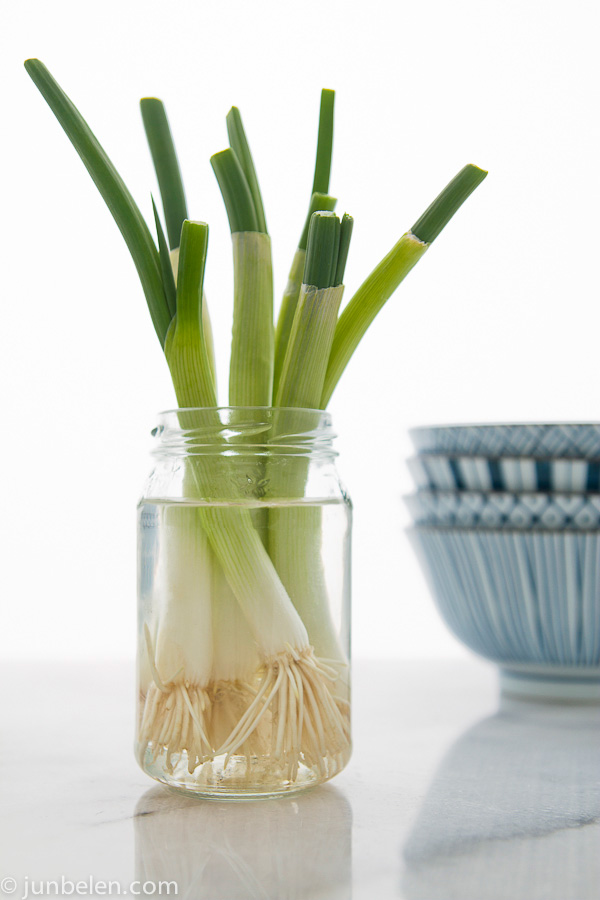
Thanks to Homemade Serenity for this great tip. Please, pass it on.
Pingback: Seedlings and More « The Hidden Hippie()
Pingback: S is for Sawsawan | Jun-Blog()
Pingback: How to Make Chicken Sotanghon Soup | Jun-Blog()
Pingback: She Couldn’t Grow Plants, Then She Learned THIS Brilliant Trick. I’m Trying This! | ReBlog Ninja()