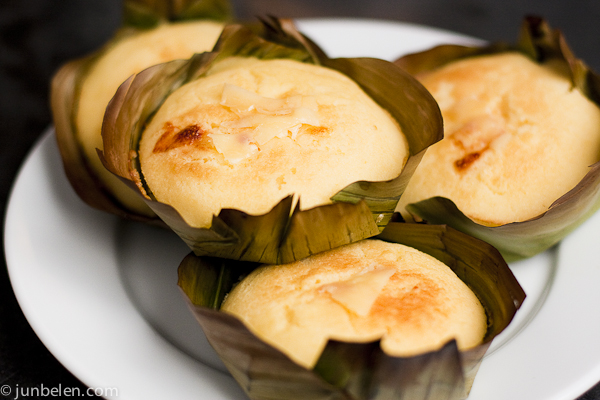
A true Filipino Christmas is never complete without the beloved bibingka — the native rice cake topped with cheese and salted egg baked over hot coals in a clay oven and served with butter, sugar and grated coconut. It is very popular during the Holidays but it’s virtually available back home anytime of the year.
I grew up enjoying this sweet treat, which brings back so many memories of Christmases past. Since I have this strong urge to indulge and, disappointingly, I could not find a decent place in the city that makes them, I decided to make bibingka myself. It’s technically not from scratch since I planned on using store-bought rice cake mix but I figured, I would use banana leaves, which would bring the level of complexity a few notches higher.
And so I drove to Manila Oriental Market, my newest discovery in the city. It’s a huge Filipino supermarket that sells pretty much all things Filipino, from notorious duck eggs to freshly baked pan de sal. I got myself a White King bibingka mix, eggs and butter. We had confectioner’s sugar at home and so I was fine. And I also bought frozen banana leaves for under a buck. I thought about getting salted eggs and coconut to grate but I decided to keep it simple for now.
Here are the ingredients.
1 250 g pack White King bibingka mix
1/2 cup confectioner’s sugar
3 eggs
1 cup water
4 tbsp melted butter
Beat 3 eggs, add the rest of the ingredients and mix until smooth. Pour the mixture into ramekins lined with banana leaves. Top with slices of cheese. Fairly simple, right? I used four 5-inch ramekins and topped the cakes with a really sharp cheddar cheese.
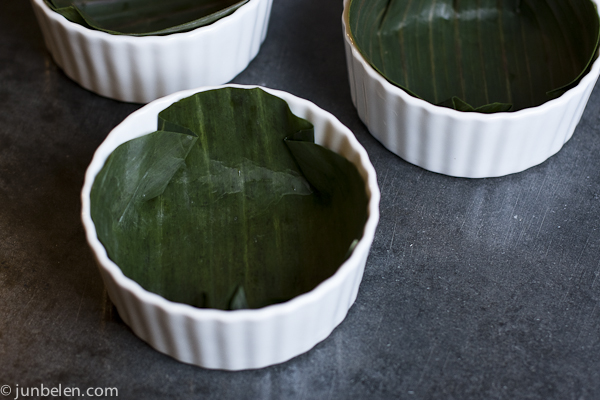
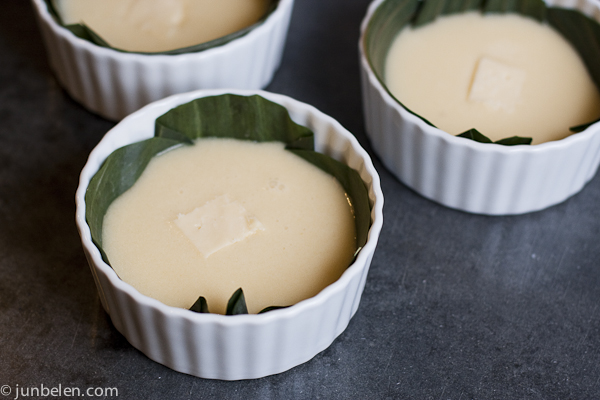
Preheat the oven at 450F and bake for 10 to 15 minutes. The White King box says it’s okay to broil but don’t. I broiled my cakes on my first try and burned them! Apple pie déjà vu!
Brush with some butter and serve hot.
I was pleasantly surprised at how good it tasted, seriously. Dennis enjoyed it a lot, too. He got a kick out of the banana leaves, which I must say made it even better. Well, next time I want to try it with salted eggs and some grated coconut. Or better yet, I want to try the real thing. It’s time to plan a trip back home.
By the way, I was completely surprised to find out that bibingka is a close relative to the Indian dessert bebinca, a pudding made of flour, sugar, butter and coconut milk. The dessert is also popular in Portugal and Mozambique.
Pingback: Crabs in Clement and Crab Cakes in the Castro « Jun-Blog()
Pingback: Ube, the Purple Yam: Why Filipinos Love Purple Sweet Treats()
Pingback: Lechón, Max’s Fried Chicken and Bibingka, Filipino Comfort Food in the Bay Area()
Pingback: Smells Like the Philippines (in pictures, mostly) | Culture Slash()
Pingback: Dessert Specials–BIBINGKA | Famous Delicacies in Angeles City()