My dad has been on my mind lately.  Just the other day, I was perusing a gift shop and a stack of playing cards instantly reminded me of him.  My dad  never tired of playing solitaire.  He could spend hours playing the game with his old, beaten-down deck of cards.  When he was still alive, I always picked up a souvenir deck from every new place I visited and sent it home along with a postcard for my mom.  He looked forward to every one of them and collected them earnestly but insisted on playing with the deck he had had for the longest time.

“We visited your father the day after the party,” my mom told me last week when I spoke with her over the phone.  The party was for her seventy-fifth birthday.   My sisters treated her to a lavish Chinese buffet to celebrate the milestone in her life.  I missed it, of course, like so many other birthdays past.

“Did you have your birthday cake?”  I asked.

“Yes, of course.  I even had two,” she bragged. My sister surprised her with a chocolate cake in the morning of her birthday and then my niece gave her another one during the party. She talked about how much food there was and how much my seven-month-old grandniece cried the entire time. “Everyone had a lovely time. Your father would have loved the party,” she added wistfully.

My dad passed away the day after my mom’s birthday four years ago.  His death wasn’t totally unexpected.  He had been going in and out of the hospital because of his failing heart and had been getting frailer and weaker every time he returned home. He barely could stand and never left his bed. We knew very well we would lose him sooner than later but still his passing was too sudden.  I had so many things I wanted to tell him.  So many things left unsaid and undone.

My dad has been on mind lately.  I’ve been picturing him sitting in his favorite chair at the kitchen table next to the jalousie windows, shuffling his deck of cards and laying them face down then face up one after the other. I’ve been picturing him sitting with his right leg folded and his knee drawn up toward his chest, eating with his bare hands. “Fish heads are the best part,” my dad used to tease me when I was little.  He would stake his claim with his bare hands and tear the head off the fish stewed in ginger and vinegar.  He would savor the head with its beady eyes and bony gills intact.  He would savor it with such immense, carefree pleasure.
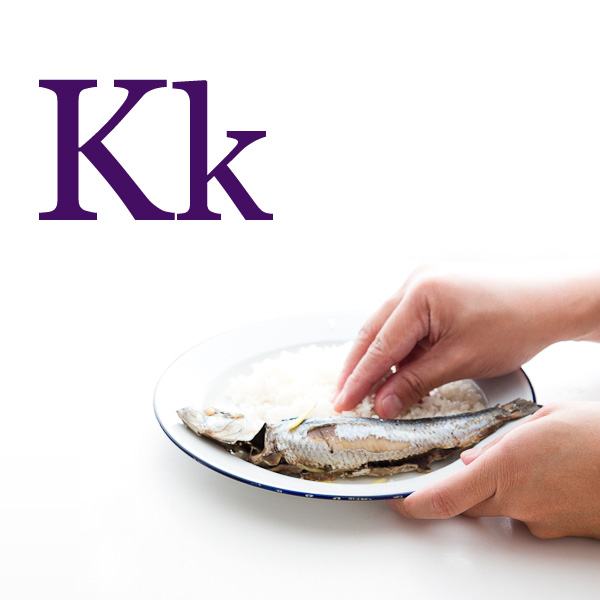
 

Kamayan


Fish Paksiw Recipe

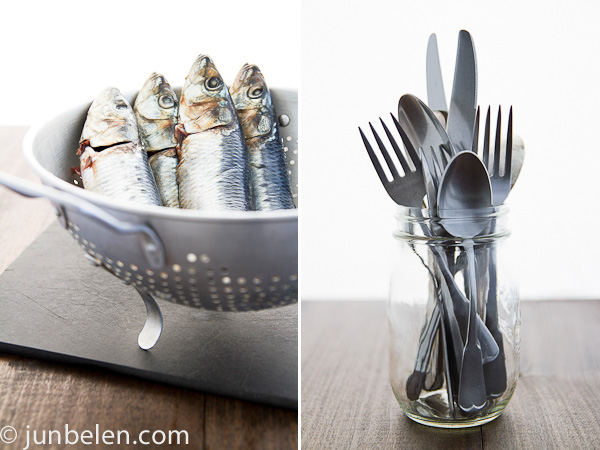
1 lb whole sardines, scaled, gutted, and cleaned
1-1/2 cups vinegar, cane or rice vinegar
1/2-inch knob of ginger, peeled and thinly sliced
1 teaspoon salt, more to taste
1 to 2 Thai chilies, optional

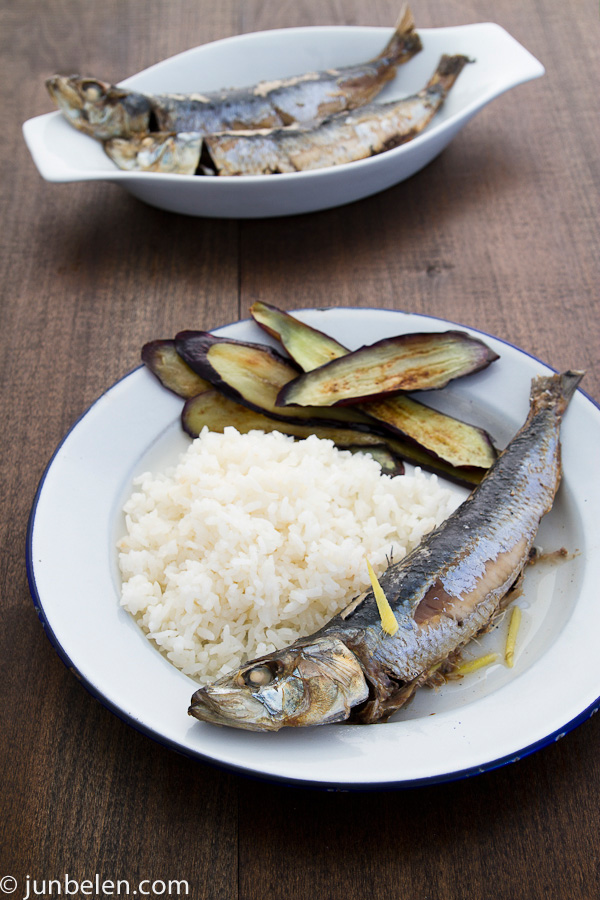
Lay the fish in a pot big enough to hold everything together. Add vinegar enough to cover the fish. Add ginger, salt, and chilies. Bring to a boil and simmer over low heat until fish is cooked, about 10 minutes. Add salt to taste. Serve at room temperature with rice and eggplants thinly sliced and fried.

Let the flavors seep in longer and enjoy paksiw the following day. Enjoy it with your bare hands like my father did. Kamay [kah-may] is Filipino for hands. Kamayan [kah-mah-yahn] is eating with them.
 

Paksiw

Paksiw


Learn the alphabet of Filipino food through our glossary. So much is lost in translation, I know, but I hope this glossary will help those unfamiliar with Filipino food become more informed.

A is for Achuete
B is for Barako Coffee
C is for Camarón
D is for Dinuguan
E is for Ensaimada
F is for Fish Balls
G is for Gata
H is for Himagas
I is for Itlog na Maalat
J is for Jackfruit
K is for Kamayan

  • http://www.asianinamericamag.com Betty Ann @Mango_Queen

    Love this post, Jun! It made me so homesick and nostalgic for my own parents who passed away. I know exactly what you mean when you tell stories about your own family back home. I love the Paksiw recipe ! I can just picture having it for lunch or dinner. That photo is so inviting. Can I use other types of fish for this paksiw?

  • http://twitter.com/thedailypalette The Daily Palette

    Jun, we have to visit San Diego together!  There’s a place there where they sell live sardines [for bait], but restaurants buy there, too, for eating [since sardines is now the new black, fish-wise].  My dad also loves paksiw and pangat.  It’s a regular thing in their house.  Now, I want some, too.  Time to defrost my sardines.  Thanks for sharing!

  • http://www.confessionsofachocoholic.com/ Bianca Garcia

    Jun what a beautiful post honoring your dad.  Thanks for sharing your memories and wonderful recipes with us.

  • Samanthafoodgeek

    Oh. This is such a sweet article and appropriate since today is Dia de los Muertos. Thank you for sharing the memory of your dad and reminding us of one of the greatest pleasures we have- eating with our hands. I, too have a thing for eating fish heads and rice with my hands! Thanks Jun!

  • http://www.inuyaki.com inuyaki

    Beautiful post and tribute to your dad. When I was an ignorant little kid, I used think my dad was weird because he ate with is hands. I later realized the cultural significance of kamayan and now engage in it often, sometimes even at places where I should be using utensils. :) My dad loves fish heads too. I haven’t really followed him down that path though.

  • http://saberkite.com saberkite

    Wonderful tribute to your dad, Jun. It’s lovely how we have memories to keep our departed loved ones close. Just the other day I was playing with my niece, and I couldn’t help but wonder how much my grandmother would love her. :)

    I am not really fond of paksiw, but I do love to eat kamayan style! Somehow, it works best with fried fish of any kid. Over the weekend I went home to the province and had plenty of tinapa (smoked fish) and tuyo (dried fish) for my meals. My hands were smelly after but it was worth it. :D

  • http://www.filipinorecipereviews.com Leny

    Hi Jun,

    I am a big fan of your blog and beautiful pictures.  Keep up the good work :)

    Your post is very touching and reminded me of my grandmother who loved solitaire and fish head..

    Very timely that I just cooked paksiw na isda for dinner today too.

    More power!

    Leny

  • http://psychosomaticaddictinsane.wordpress.com Iya S. Santos

    awww. this entry brought tears to my eyes. si daddy ko ang nagturo sa akin na kumain ng ulo ng isda eh. hehehe. ang favorite naman namin paksiw na bangus or bonor (sa Pangasinan marami nito) tapos may kasamang sinangag at pritong itlog. bet ko rin ang may kasamang fried eggplants.

    pero ang fave ko na kasama talaga ng paksiw ay ginisang munggo with ampalaya leaves at chicharon.

    love this entry, jun. simplicity rocks. :)

  • http://80breakfasts.blogspot.com joey

    Such a lovely post for your father.  And a nice and simple, and delicious, Filipino dish.  Your dad is right though…the heads are indeed the best part of the fish, and there is no better way to enjoy fish still on the bone but with your bare hands :)

  • http://www.skiptomalou.net SKIP TO MALOU

    Sending you ::::HUGS:::: Jun!  I know how memories are triggered by a single object (and in your case a deck of cards in a store…) and how it transports you back in time.  Your dad is still around because of these memories so hold it close to you heart.
    I love paksiw na fish and would eat it kamayan style.  I don’t mind if it will take 3 lemon slices to wash away the “smell” in your hands haha… i love touching my food this way too.
    Happy birthday to your mom…  I’m sure you would have baked her a cake if you were in Manila with her.

  • Beth Remigio

    A touching and lovely tribute to your father. Most Filipinos do love eating kamayan style, especially with fish. Fish paksiw is one of the healthiest food we can have.
    Did you know that there is a place in Lucban that is called Kamayan sa Palaisdaan? it is a haven for fish inihaw,inihaw na liempo veggies, and other native dishes we  love to eat kamayan syle. there you can dine in huts or in what they call balsas amidst a palaisdaan.

  • Anonymous

    Wonderful dish.  I can never make it anymore because the smell of vinegar and fish would linger in my galley kitchen (no ventilation).  I too lost my father several years ago and feel the memories of times we spent together linger especially when we get together at my mom’s for holidays.

    But aroma of food always bring good memories of simple dinners.

  • Jill

    A very moving piece about your Father.  That is the beauty of our culture, very family oriented.  That’s why, generally, Filipino’s are raised well and evolve to become kind and loving people.  Lucky are the ones who’ve emerged to become the best that they can be (in the Army! Hahaha!).

    Paksiw is my all time favorite, comfort food if you may.  In Kapampangan it’s called “Paksi”.  I prefer the sauce more than the fish though.  And yes, it is best eaten the following day when the acid of the vinegar is more subdued.  I usually pair the “sabaw” with sinangag and chicharon.  Mmmmm!!!

  • Flordeliz_burgos

    Thank you for mentioning Daddy in your food blog I really miss him  just what I felt last Nov. 1 when we visited him in the cemetery.  He really loves to eat with his bare hands most especially paksiw na bangus (milkfish) but sardines is a good substitute. Ang galing-galing ni Father in disecting the fish head at sinisipsip pa niya ito. Kamayan is really a tribute to our dear Daddy.   

  • http://blog.junbelen.com/ Jun Belen

    Thank you, Jill for your very kind words.  When I was little I hated the smell and the taste of pure vinegar.  But I didn’t mind it when it is cooked in adobo or paksiw.  Funny that you mentioned paksiw with sinagag and chicharron.  I never dipped chicharron with pure vinegar but I would sprinkle the paksiw broth over the fried pork rinds. More subdued as you’ve said. My mouth is watering just thinking about it.

  • Pingback: My Favorite Filipino Dish | Keeping Up with the Purita Joneses

  • http://puritajones.wordpress.com/ Mai Mai

    I love that you fried the eggplant instead of including it in the stew. I wrote a similar post after reading this and added this post as a hyperlink. I hope you don’t mind :) Great blog!

  • Pingback: L is for Longganisa (Filipino-Style Sausage) | Jun-Blog

  • althea carmelo

    Paksiw na Isda is best eaten with bare hands, a simple dish that always make me eat more rice with it specially dipped in a fishsauce/vinegar concoction…..My grandma in Navotas always serve fresh Paksiw na Bisugo (Whiting) with Garlic Fried Rice  every breakfast, when I was growing up=)  And  sitting with one’s right leg folded and other knee drawn up toward one’s chest gives that extra x-factor…I had this habit too when I was young from my grandma=)

  • Pingback: M is for Mani and How to Make Pritong Mani (Fried Peanuts) | Jun-Blog

  • http://matchaflan.wordpress.com/ matchaflan

    this dish is so elegantly simple and yet sounds delicious! It reminds me of the way we Vietnamese eat fish – we would just fry the fish unseasoned and dip it in fish sauce, vinegar/lemon juice, sugar & garlic. Ginger sounds like an excellent idea. As always, I love your pictures :) Thanks for the post.

  • Pingback: N is for Noche Buena | Jun-Blog

  • Pingback: O is for Omelet and How to Make Tortang Talong (Eggplant Omelet) | Jun-Blog

  • Pingback: Q is for Queso and How to Make Cheddar Cheese Ice Cream and Peanut Brittle | Jun-Blog

  • Pingback: R is for Relleno and How to Make Rellenong Alimasag (Filipino-style Stuffed Crabs) | Jun-Blog

  • Pingback: S is for Sawsawan | Jun-Blog

  • kwekwek

    Your site is an oasis and inspirational. Your photos are classy and well composed. It’s like the ikea and crate and barrel of food uplifted to artistic level.

  • Pingback: U is for Ube and How to Make Ube Macapuno Empanadas | Jun-Blog

  • Pingback: V is for Visayas and How to Make Humba (Visayan-Style Pork Adobo) | Jun-Blog

  • Pingback: How to Make Daing na Bangus | Jun-Blog